 Skip to content

In this article, I want to share my understanding of why feelings matter. This is a question I often confront in the therapy room.
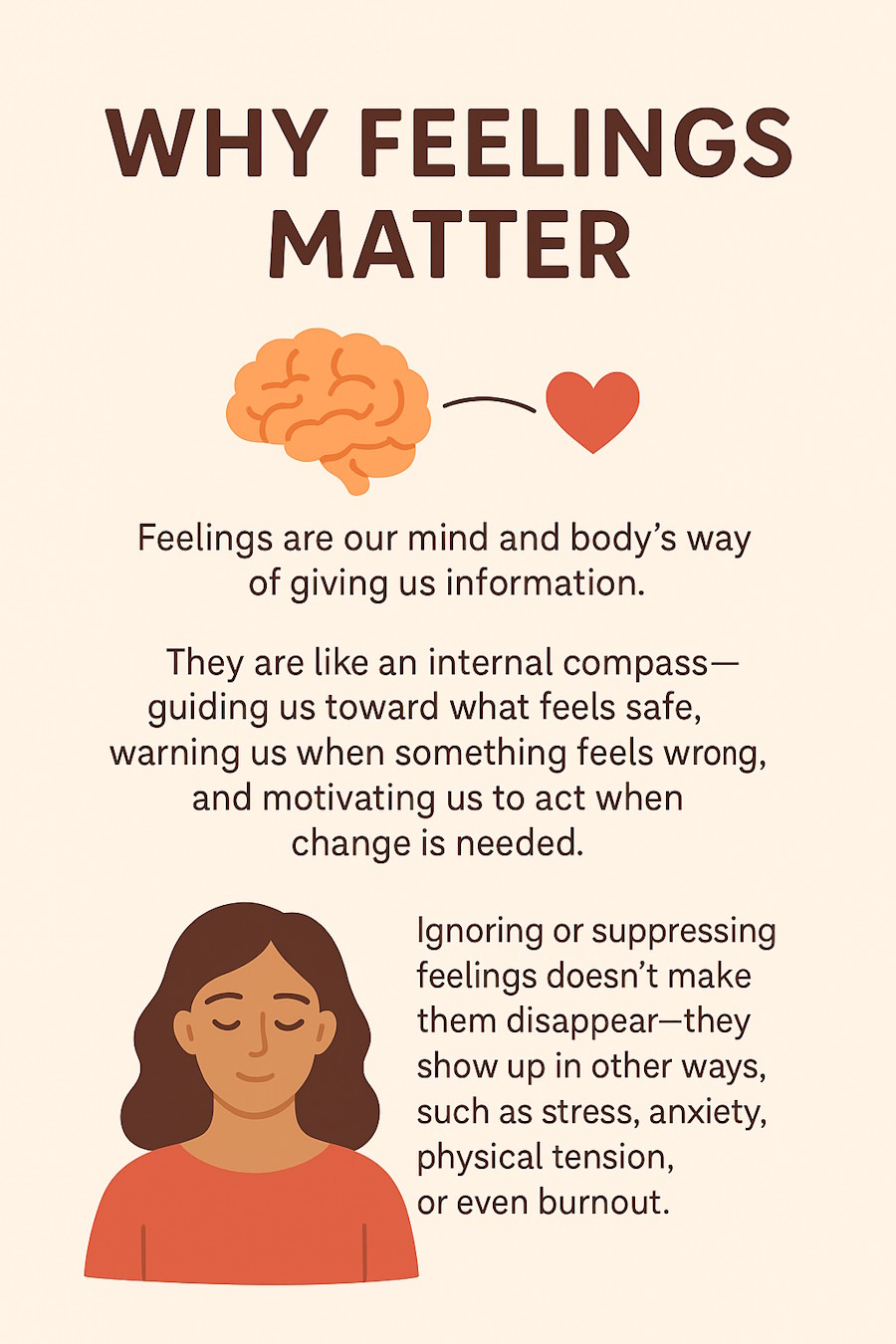
Feelings are our mind and body’s way of providing us with information. They act like an internal compass guiding us towards what feels safe, warning us when something is wrong, and motivating us to act when change is necessary.
When we pay attention to our feelings, we gain insight into our needs, boundaries, and desires. For instance, anger might indicate that a boundary has been crossed, sadness could prompt us to slow down and mourn, and joy reminds us of what’s meaningful and worth pursuing.
Ignoring or suppressing feelings doesn’t make them disappear often, they manifest in other ways, such as stress, anxiety, physical tension, or even burnout. Naming and processing our emotions allow us to respond thoughtfully rather than react impulsively.
In summary, feelings matter because they connect us to ourselves and to others. They help us understand who we are, what we need, and how to live in harmony with our values. Let’s explore the importance of developing emotional literacy and how acknowledging your feelings can enhance mental health, alleviate anxiety, and foster deeper self-awareness.
Why Naming Your Feelings Changes Everything
Have you ever caught yourself saying you were “fine” when you really weren’t?
Many of us can identify big emotions like happiness, sadness, or anger, but struggle to express the more subtle feelings that shape our daily lives.
This is where emotional literacy comes in: the ability to identify, understand, and express emotions.
It is a powerful tool for promoting mental health, managing stress, and building stronger relationships.
The Science Behind Naming Emotions
As a psychotherapist, I see emotions as our body’s internal guidance system. They tell us when something feels right, when it feels wrong, and when we need to make a change.
When we ignore emotions, they often turn into stress, anxiety, or physical symptoms. When we name what we feel, something powerful happens.
Neuroscientist Dr. Dan Siegel refers to this process as “name it to tame it.” Research shows that putting words to an emotion activates the prefrontal cortex, the part of the brain that helps us calm down and make clear decisions.
Instead of reacting impulsively, we can pause, breathe, and choose our response.
Why Many of Us Struggle to Name Our Feelings
Growing up, many of us were told to:
- Stop crying.
- Be strong.
- Calm down.
Messages like these teach us to hide or dismiss our feelings. As adults, this makes it harder to connect with ourselves and others.
In therapy, building emotional awareness is often the first step toward healing. It’s deeply empowering to be able to say:
- I feel lonely.
- I feel hopeful.
- I feel proud.
Introducing the A to Z of Feelings
To make this easier, I created a resource: The A to Z of Feelings.
It is a simple yet powerful list of emotions, ranging from affectionate to zealous, designed to help you expand your emotional vocabulary and connect with yourself on a deeper level.
How to Use This Resource
Daily Check-In: Read through the list and choose a word that describes how you feel today.
Journaling Prompt: Right now, I feel _____ because _______.
Parenting Tool: Share the list with children or teens to help them develop emotional language early on.
Download the free A to Z of Feelings PDF below –
Working With Big Feelings Like Anxiety or Sadness
Some emotions, like anxiety, fear, and sadness, can feel overwhelming. Instead of avoiding them, try approaching them with an open mind and curiosity.
Practical Tools
- Ground Yourself: Practice slow breathing or gentle body scans.
- Get Curious: Ask, “What is this feeling here to tell me?”
- Seek Support: Talk to a trusted friend or therapist if the feeling is too heavy.
- Remember, emotions are not good or bad — they are information.
- Take the First Step Toward Emotional Well-being
When we learn to name and acknowledge our feelings, we become more self-aware, more connected, and better equipped to respond to life’s challenges.
Please take a moment today to explore the A to Z of Feelings and notice how it feels to give language to what is happening inside you. This small step can create significant shifts in your mental health, relationships, and sense of self.
—