 Skip to content

It was one of those indecisive Irish summer days the kind where the sky is thick with heat but holds the threat of rain. The air was clammy, pressing itself against my skin as I walked home. I had a light summer rain jacket on, but it quickly became unbearable. I stopped and peeled it off, and the moment the breeze touched my arms, I felt the shift not just physical, but something deeper. A cooling, yes. A release. Or as the Shamanic cultures suggest a lost soul piece returning.
And then, the wind unlocking a memory long kept in the lines drawn on my skin, I remembered.
Not a thought. Not even a flash of memory in the usual sense. More like a ripple visceral and immediate. A sense memory. A full-body remembering of something I’ve carried all my life.
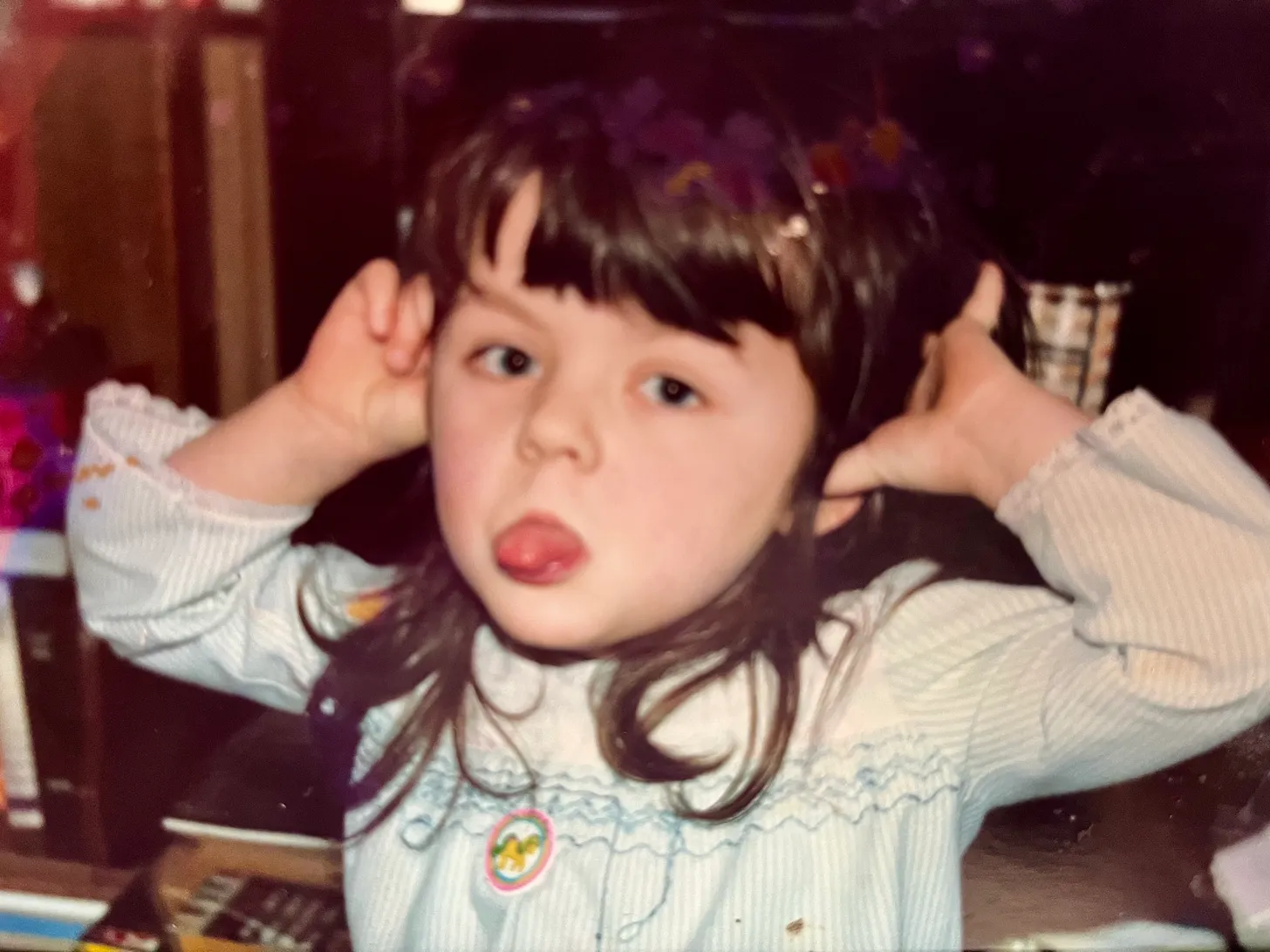
I saw my little self again. And the tears come to the surface and dance on the hot canvas of my face.
Struggling to breathe under the weight of clothes that never felt right wasn’t just discomfort it was a kind of quiet, daily torture. The scratchy tights weren’t just itchy, no it felt like nettles wrapped around my legs, buzzing and stinging with every movement. I would fidget, pull at them, try to adjust them in a hundred tiny ways, but they always found new ways to irritate me. The seams felt like splinters. The fabric like punishment.
Jeans were the enemy so stiff, unyielding, pressing in all the wrong places. They cinched my waist, rubbed against my skin, and made sitting, standing, or even existing feel like a battle. Buckles and buttons jabbed into my belly like dull knives, forcing me to constantly shift and wriggle just to find a position that didn’t make me want to scream. But I learned not to scream.
I learned to swallow it down.
Then there were the tags. Those tiny squares of fabric, usually an afterthought for most people, were unbearable for me. They scratched the back of my neck like razor blades. I would twist my shirt around, stretch it out, try to create space between it and my skin. Sometimes I would beg for scissors, plead for the label to be cut out. The relief that came from removing it felt like being able to breathe again.
Jackets weren’t comforting. They didn’t keep me warm they made me feel trapped. Encased. Like I was zipped inside something I couldn’t escape from. I remember the way they pressed on my chest, restricted my arms, made me feel bulky and boxed in. Every layer added was another layer further from comfort, further from ease.
And then came the dresses. The pretty ones. The ones I was supposed to like. The ones all the other little girls were twirling in. I was told I should wear them. That they were cute. That this is what girls do. But I didn’t want to wear them. I hated how they clung to me, how they made me feel seen in the wrong way. Exposed, rather than expressed. The frilly edges itched. The waistbands pinched. The expectations weighed more than the fabric ever did.
And so I learned to hide my reactions, to silence my sensations. I learned that the comfort of others teachers, parents, strangers mattered more than my own. I learned to perform, to endure, to fake it. But underneath the surface, my body was screaming.
What no one understood, what even I didn’t understand at the time was that this wasn’t fussiness. This wasn’t being dramatic. This was sensory overload. This was my nervous system trying to communicate a boundary, a need, a truth. And time after time, that truth was dismissed.
And each dismissal chipped away at my sense of self. Each “Don’t be silly,” each rolled eye, each sigh of exasperation taught me to mistrust my own body, my own experience. Until eventually, I stopped speaking up altogether.
But the body never forgets.
Back then, I didn’t have the words to describe what was happening. I just knew something felt wrong. Everything felt wrong. Maybe I was wrong.
And when I tried to express it, when I tried to explain, I was shut down. “You’re just being dramatic.”
“Stop making a fuss.”
“Other children wear these things all the time.”
“Don’t be so sensitive.”
And the one that cut deepest:
“Don’t be so stupid, you silly girl.”
I wasn’t being silly. I wasn’t being dramatic.
I was uncomfortable. I was overwhelmed. I was irritated by sensations that others seemed not to notice. My nervous system was screaming but I didn’t know what that was, back then. And no one else seemed to know either or seemed to understand me.
There’s a particular kind of loneliness that comes from being unseen in your most vulnerable, sensory truth.
I remember my teacher’s voice, sharp and loud, telling me I was disobedient and disruptive because I couldn’t sit still. But I couldn’t sit still. My tights were burning me. My body felt like it was under attack. And when I said that, she laughed. “Tights can’t feel like nettles,” she barked. But they did. To me, they did.
I remember standing in a shop with my mother. A changing room. A skirt in her hand pink and pretty, frilly at the edges. I said no. I didn’t want to wear it. It felt wrong. But her eyes narrowed, her patience evaporating. “All the girls your age wear skirts,” she said. And
somewhere inside me, a doubt grew like a weed strangling me until the breathe left —Does this mean I’m not really a little girl? Am I wrong for not liking what I’m supposed to like?
These aren’t just stories of childhood discomfort. These are stories of disconnect. Of shame. Of a nervous system overwhelmed and a soul unrecognised. These are the micro moments where my sense of self began to bend and contort just to fit into the world around me.
And now, at 42, I’m beginning to understand why.
I have recently discovered that I am neurodivergent.
It’s a strange and tender thing to uncover a truth about yourself so late in life. There’s a grieving that comes with it a deep mourning for the child who was misunderstood, the teen who felt like she didn’t quite belong, the young woman who couldn’t explain her internal chaos. There’s sadness, yes. But also, such clarity.
Finally, I can name it.
Finally, I understand why certain fabrics made me cry.
Why I preferred bare feet to shoes, loose clothes to fashion.
Why the world often felt too loud, too bright, too much.
Why I retreated into silence or anger when I couldn’t take any more.
My nervous system was doing what it needed to do to protect me. I was not broken. I was not wrong. I was simply me—living in a world that didn’t know how to meet my needs.
There is something profoundly healing about knowing now, as an adult, that I wasn’t “too sensitive” I was deeply attuned. My body was speaking in a language no one had taught me how to understand. And now, I’m learning to listen.
The breeze on my skin that June day brought all of this forward. A sensory portal. A reminder. A small liberation. A soul piece returning and the tears of grief set free.
I took off the jacket, yes but I also began to take off the layers of self-judgment I’ve worn for years. I felt a soft whisper in my bones: You are not too much. You never were. You were always telling the truth.
To the little girl I used to be:
I see you.
I believe you.
You are not silly. You are not difficult. You are not wrong.
You are real, and your experience was valid.
I’m so sorry no one told you that at the time.
And to the woman I am now, emerging in this new chapter of self-knowing: Welcome home.
—